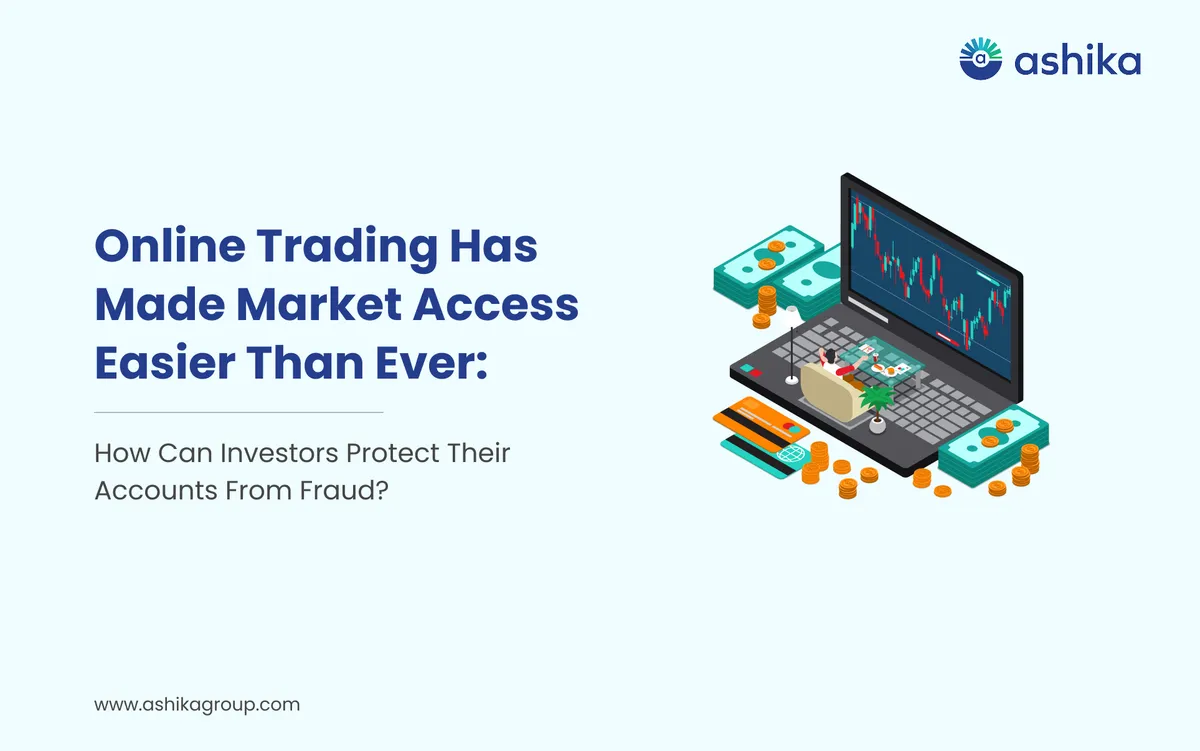
A chat group named after a well-known investment company, featuring a 'portfolio manager' who promises guaranteed returns, and including a link to download an app that appears entirely legitimate until your money vanishes. These are not merely imaginary situations—SEBI has repeatedly identified these patterns through 2026—and they are causing Indian investors to lose real money, sometimes all the money they had invested in a particular scheme.
Table of Contents
- The "Account Handling" Scam SEBI Just Warned About
- When the Impersonation Gets Sophisticated
- Social Media Is Now a Primary Fraud Channel
- What SEBI Is Doing to Close the Gap
- Practical Steps to Protect Your Trading Account
- Why This Matters More as More People Start Investing
- What You Should Do Next
- Frequently Asked Questions
The "Account Handling" Scam SEBI Just Warned About
In February 2026, SEBI gave a formal warning concerning people that it referred to as "account handlers" — fraudsters who pretend to be expert fund managers or providers of Portfolio Management Services and who promise to deliver risk-free profits as long as investors hand over control of their demat or trading accounts. The way in which they operate is simple and very dangerous: they ask for a minimum amount of capital, take their share of any profits, but let the investor take on 100% of the losses. SEBI made it clear that these individuals are not registered and work completely outside the scope of its regulatory supervision — which means that there is no fund on which an appeal can be made and no licence can be cancelled after the harm has been done. The most obvious warning sign is the request itself: no genuine advisor or fund manager would ever need your account login details in order to manage your money.
When the Impersonation Gets Sophisticated
Fraud has now gone far beyond simple tip-sharing in group chats. In July 2026, SEBI gave a specific warning to listed companies regarding what it referred to as the "Boss Scam", in which attackers use AI voice cloning and deepfake video calls to impersonate CEOs and senior executives in order to get finance staff into sending money quickly. Another technique involves attackers gaining access to a colleague's WhatsApp account by using malicious files, after which they use that account, which looks genuine, to tell real employees to make payments to mule accounts. Although this type of scam is aimed at corporate finance teams, the same principle applies to individual investors as well: a name or number you recognise on your screen does not any longer prove that the message is genuine.
Social Media Is Now a Primary Fraud Channel
In May 2026, SEBI prohibited seven people from taking part in the securities market because it was alleged that they had manipulated the shares of 82 small-cap companies by carrying out coordinated actions on Telegram, WhatsApp, and X. This case was not isolated; it illustrates a wider trend that regulators have been monitoring in which pump-and-dump schemes are first organised in private groups before being spread via public social platforms, usually supported by screenshots of fake "successful trades" in order to gain the trust of new victims.
It is clear from actual cases. For example, The Hindu reported that in one case a businessman from Hyderabad was included in a WhatsApp group that pretended to be an well-known international investment firm, was encouraged to make small investments at first in order to see profitable returns, and then had his entire investment cheated out once trust had been built – resulting in a loss of more than ₹57 lakh. In the same city a second person suffered a loss of ₹58.6 lakh through a scheme similar to the first one, which also used a group falsely claiming to represent another major firm. In both instances the pattern was the same: gain the victim's trust by offering small early successes and then take all their money when the victim had committed larger amounts.
What SEBI Is Doing to Close the Gap
The regulators have not remained passive in this matter. From April 2024 to June 2025, SEBI launched enforcement actions against 886 companies which were engaged in market manipulation and misleading financial reporting. Starting on 1 May 2026, SEBI made it obligatory for all registered market intermediaries to clearly show their registration information on social media sites in order to enable investors to tell the genuine, regulated companies apart from impersonators and unregistered operators. This one verification step—making sure that an account or a person actually displays valid SEBI registration details—is now one of the easiest methods of eliminating a large portion of fraudulent approaches before they can proceed any further.
Yet there are actual limitations when it comes to enforcement. Fraud investigators have stated that the regulatory requirement concerning court orders before freezing the accounts of suspected mule banks can delay actions, providing fraudsters with a chance to move the money before the authorities can take steps — which is exactly the reason why prevention is more important than recovery afterwards in most of these cases.
Practical Steps to Protect Your Trading Account
Because of the way these schemes function in reality, there are a few habits that make a big difference. Don't ever give your trading account password, PIN, or one-time password to anyone—no genuine broker, advisor, or representative from a platform will ever request them. When checking whether a firm is registered with SEBI, do so independently by going to SEBI's official website rather than relying on a screenshot or certificate that has been sent directly to you, as these can be faked. Any claim of "guaranteed" or "risk-free" returns should act as a clear warning sign since no legitimate investment can make such a promise. You should be particularly wary of WhatsApp or Telegram groups that use the names of well-known financial institutions—regulators have specifically pointed out that this is a common method of impersonation. And make sure to turn on two-factor authentication whenever your broker provides the option, because having just your password stolen shouldn't be sufficient to gain access to your account.
Why This Matters More as More People Start Investing
With India's number of investors continuing to grow so that it now includes people in smaller cities and those who are new to the game and have little understanding of how real advisory relationships function, fraudsters are simply moving in along the same lines—using WhatsApp, Telegram and social media—where they can most easily reach new investors and who have not yet developed any suspicion. The only way to stay safe is by exercising a basic degree of discipline: check things out before placing trust and never allow anyone else to manage your account for you.
Ready to open yours?
Free account opening · Paperless eKYC · Live in 10 minutes
What You Should Do Next
- Do not give your trading account login details, one-time password, or PIN to anyone who says they are looking after your account for you.
- Before you proceed, make sure to check independently whether the advisor or the platform is registered with SEBI on the regulator's official website.
- Take any claim that says "guaranteed returns" or "risk-free profit" as a clear warning sign, no matter how believable the source may seem.
- Immediately report to SEBI or the local cybercrime authorities any suspicious WhatsApp or Telegram investment groups, in particular those that use the names of well-known financial brands.
It has nothing to do with avoiding technology to protect your trading account; instead, it's a matter of remaining vigilant about the way fraud currently spreads, mainly by taking advantage of trust that is developed in private chat groups before it gets to your bank account.
Frequently Asked Questions
What are common trading account scams in India?
Common scams include fake investment groups, impersonation of registered brokers, unauthorised account handling and promises of guaranteed returns.
Should I share my trading account login details with an advisor?
No. Never share your password, PIN or OTP with anyone claiming to manage your trading account.
How can I verify whether a stockbroker or investment advisor is registered with SEBI?
Check the registration details independently through SEBI’s official website instead of relying on screenshots or documents shared by someone online.
Are investment groups on WhatsApp and Telegram safe?
Not necessarily. Fraudsters may use these groups to impersonate financial institutions, circulate misleading tips and promote fake investment schemes.
What should I do if I suspect a trading account fraud?
Stop communicating with the suspected fraudster, contact your broker immediately and report the incident to the appropriate cybercrime authorities or SEBI.
Was this article helpful?
Thanks for your feedback!
 5 min read