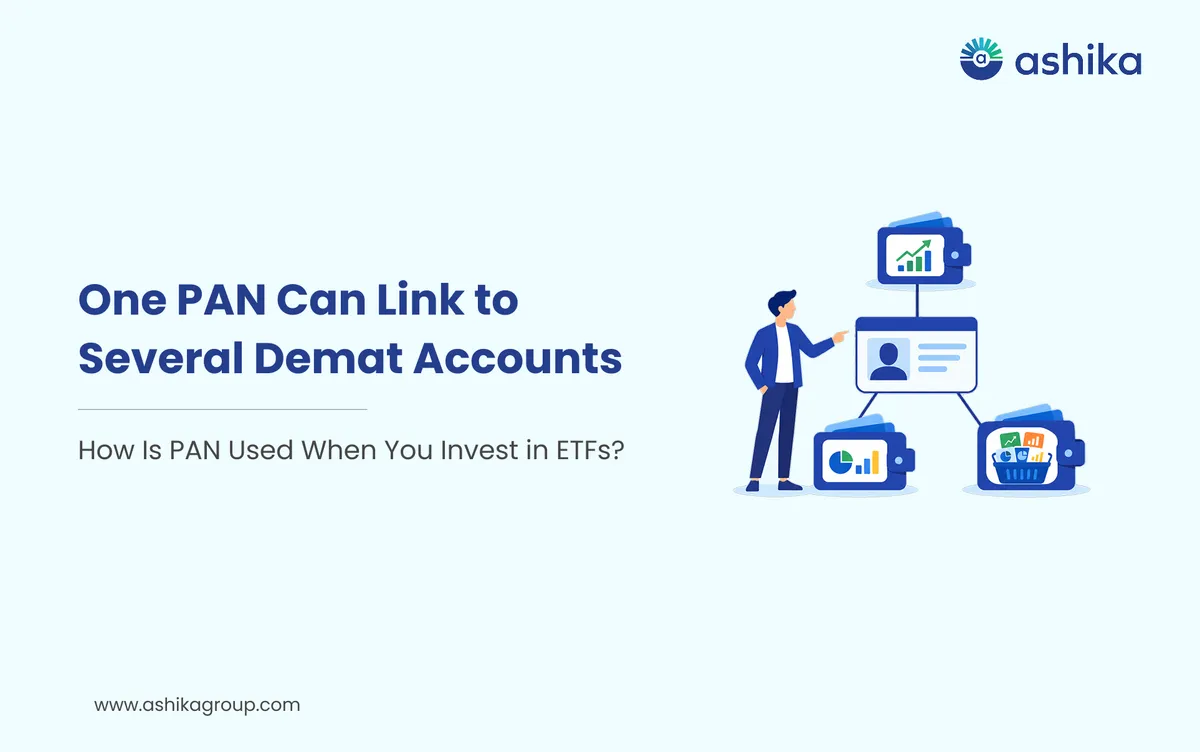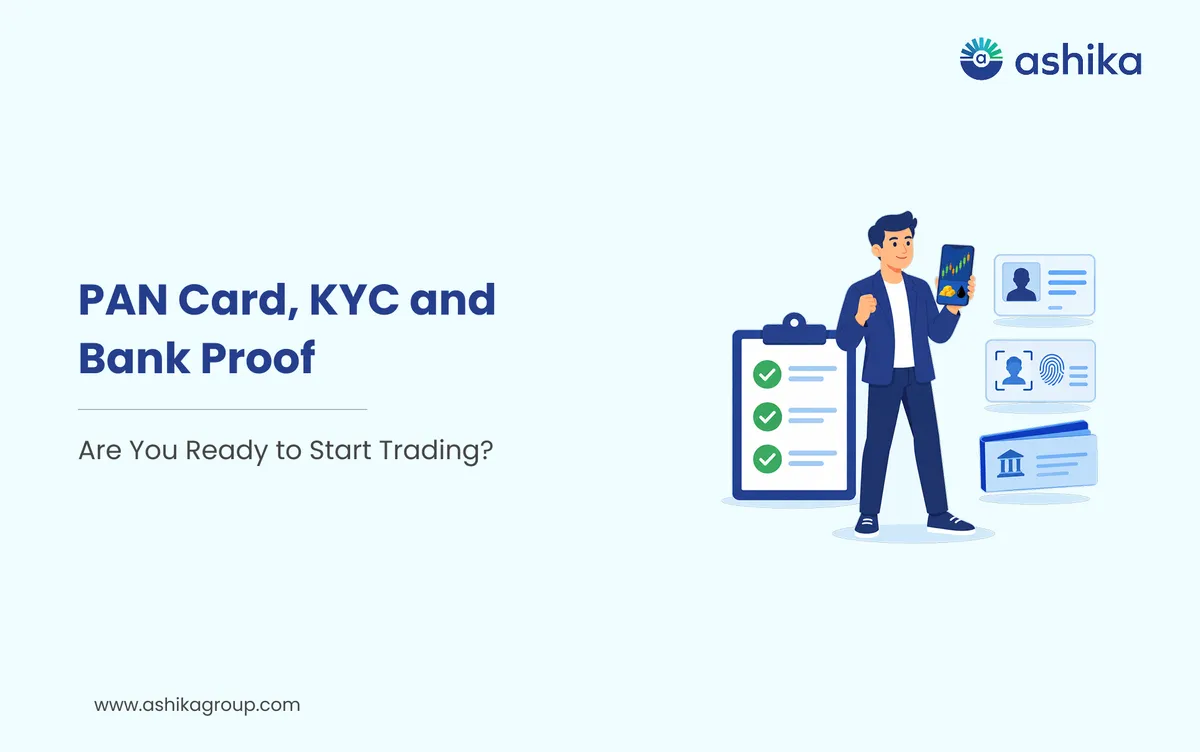
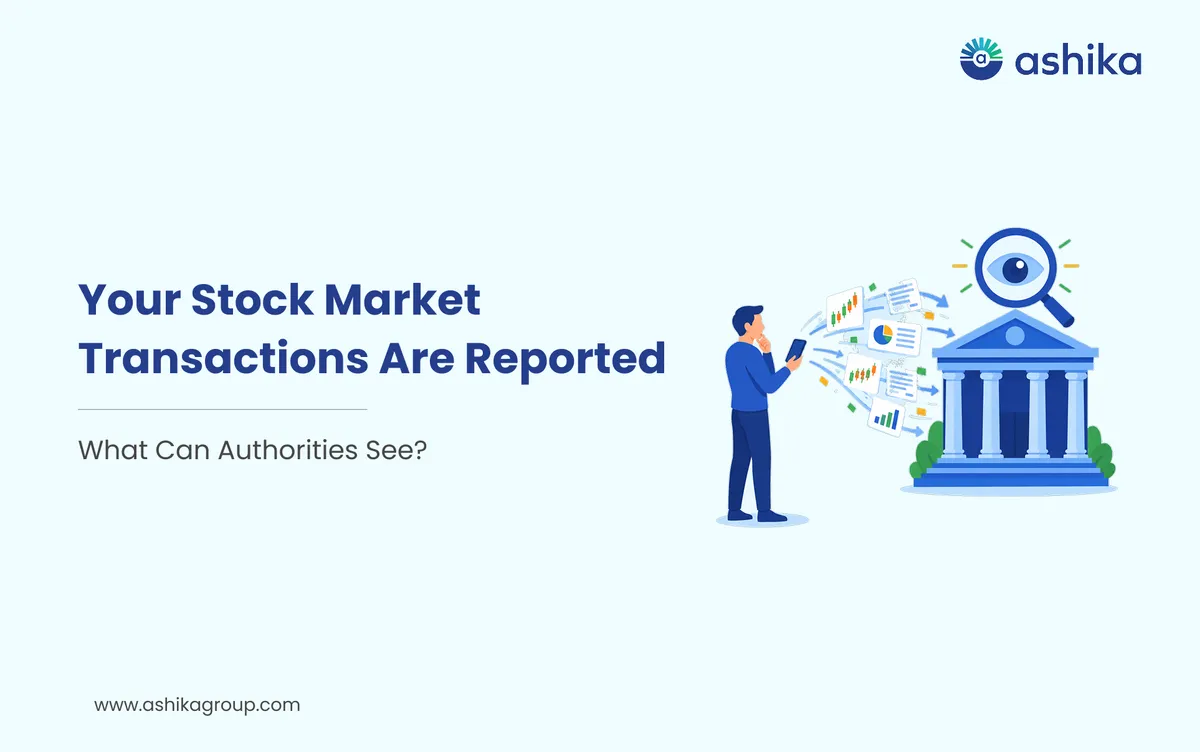
When you open a brokerage account in India your PAN is one of the key details that you'll be asked for at the point of registration. It's used to identify you as an investor and to link your account to your securities market transactions.
But what happens to your PAN once you've submitted it? How do the brokers, the stock exchanges and the depositories use it? And what information can the IT Department get about your investments?
Understanding how PAN based reporting works will help you to keep your records accurate, check your tax position and manage your brokerage account in a much clearer way.
Table of Contents
- 1. Why is a PAN required for a brokerage account?
- 2. What information does your broker collect?
- 3. What information can be shared with the authorities?
- 4. How does PAN link your transactions to AIS?
- 5. Does reporting mean you have to pay tax on every transaction?
- 6. What if the AIS displays incorrect information?
- 7. How can investors keep their brokerage records accurate?
- Understand How Your PAN Connects Your Investments
- Frequently Asked Questions
1. Why is a PAN required for a brokerage account?
PAN is a unique identification number issued by the Income Tax Department. In the securities market in India it is the key identifier for the investor.
When you open a brokerage account your broker will collect and verify your PAN as part of the KYC process.
This helps to establish your identity and links your client information to your trading activity.
For instance if you buy shares via a trading account and then subsequently sell them your PAN is used to identify the investor in those transactions.
SEBI has specified that PAN is to be the only identification number for participants in the securities market (with certain specified exceptions). This is in order to facilitate the maintenance of transaction records and to enable the regulators and authorities to retrieve the relevant information.
2. What information does your broker collect?
During account opening and ongoing verification, a broker generally collects information such as:
- PAN and personal identification details
- Name, date of birth and address
- Bank account details
- Trading account and client identification details
- Demat account information, where applicable
- Contact information and KYC records
This information enables the broker to keep your account active and to comply with the relevant regulatory requirements.
Your broker will also have records of orders, executed trades, funds received or paid, securities transactions and the relevant charges.
These records are of course critical for account servicing, for regulatory compliance, for transaction verification and for resolving discrepancies.
3. What information can be shared with the authorities?
Information relating to transactions in the securities market may be submitted to the Income Tax Department via the prescribed reporting mechanism.
Under the SFT regime, certain entities are required to report certain financial transactions in the prescribed format.
For transactions in listed securities and units of mutual funds, reporting entities can include:
- Recognised stock exchanges
- Depositories
- Recognised clearing corporations
- Registrars and transfer agents
This means the transaction data could get to the ITD via the securities market reporting system. It doesn't necessarily mean your broker is going to send every trade directly to the ITD on your behalf.
The information reported can assist the authorities in understanding the pattern of investment and transactions linked to a taxpayer's PAN.
4. How does PAN link your transactions to AIS?
The Annual Information Statement (AIS) is an information statement which is available via the Income Tax Department's portal.
It may contain financial information provided by various entities, including information on securities transactions.
For instance if you buy or sell listed securities the relevant transaction information will appear in AIS on the basis of the reporting data received by the department.
The information can be used by taxpayers to review their financial position as they are preparing their Income Tax Return.
AIS is not in any way a substitute for your own records. The figures reported may well need to be reconciled with your broker's statements, your contract notes, your Demat records and your tax calculations.
5. Does reporting mean you have to pay tax on every transaction?
No a transaction being reported doesn't in itself create taxable income.
Buying shares is not the same as making a profit. Selling shares may give rise to a capital gain or a capital loss depending on the cost of purchase, the consideration for sale, the holding period and the tax rules that apply.
Similarly an investor may sell securities to rebalance a portfolio, to meet a financial need or to exit an investment at a loss.
The tax treatment will depend on the nature of the transaction and the relevant provisions of the Income Tax Act.
Reported information should be viewed in the context of your actual income, your actual gains and losses and your actual tax liabilities.
6. What if the AIS displays incorrect information?
If the AIS information doesn't match your records then don't ignore the discrepancy.
Start by comparing the details with:
- Broker’s profit and loss statement
- Contract notes
- Trading ledger
- Demat transaction statement
- Bank statements
- Tax computation records
The AIS portal also allows you to submit feedback on some of the information that has been reported.
If you do spot a discrepancy then please check the relevant transaction and submit feedback as appropriate. Ensure that your supporting documentation is available should you be required to provide further clarification.
7. How can investors keep their brokerage records accurate?
A few simple practices can make reporting and tax filing easier:
- Keep your PAN and KYC details up to date with your broker.
- Download and keep your contract notes and account statements.
- Review your AIS and Form 26AS when you're preparing your ITR.
- Reconcile the transactions that have been reported against your own records.
- Correct the inaccurate information via the appropriate process.
- If in any doubt as to the treatment of a transaction then seek advice from a qualified tax professional.
Ready to open yours?
Free account opening · Paperless eKYC · Live in 10 minutes
Understand How Your PAN Connects Your Investments
PAN plays a key role in the identification of investors and in the maintenance of records in the Indian securities market.
Via the reporting mechanisms through the exchanges, depositories and other specified entities, transaction data can be made available to the Income Tax Department and will be reflected in the AIS.
Reviewing your brokerage statements and tax information regularly can help you understand your investment activity and file your returns more accurately.
Frequently Asked Questions
If I buy shares but do not sell them, will the purchase still appear in my AIS?
Yes, certain securities transactions, including purchases, may be reported to the Income Tax Department and reflected in your AIS. A reported purchase does not automatically mean you have earned taxable income.
Does my broker directly report every trade I make to the Income Tax Department?
Not necessarily. Under the SFT framework, specified entities such as stock exchanges, depositories and clearing corporations report prescribed transactions. This information may then be reflected in your AIS.
Why does the transaction value in my AIS differ from the profit shown in my broker's statement?
AIS may show transaction information, such as the value of securities bought or sold, rather than your actual profit or loss. Profit or loss must be calculated using the relevant purchase cost, sale consideration and applicable tax rules.
If a transaction appears in my AIS, does that mean I must pay tax on it?
No. Reporting a transaction does not automatically make it taxable. Tax liability depends on the nature of the transaction, whether it resulted in a gain or income, and the applicable tax provisions.
What should I do if my AIS shows a share transaction that I never made?
Check your contract notes, broker's ledger and Demat statement to identify the discrepancy. You can submit feedback against eligible information through the AIS portal and retain supporting records in case further clarification is required.
Was this article helpful?
Thanks for your feedback!

 6 min read