Making your first investment can be an exciting thing to do but it invariably comes with a host of questions. Do you need a PAN card? Do you need to open a Demat account? How do you go about choosing an investment and where do you start?
For beginners in India,, getting to grips with these fundamentals can go a long way to making the process of investing easier to manage. A PAN is of course a key form of financial identity and having a good investment platform will give you access to a range of market linked products. The key thing is that you should be investing with an understanding of your own financial needs rather than just going out and downloading an app or buying your first share.
Here's a step by step guide to get you started.
Table of Contents
- 1. Understand Why You Need a PAN Card
- 2. Complete Your KYC Verification
- 3. Know the Difference Between a Demat and Trading Account
- 4. Choose an Investment App for Beginners Carefully
- 5. Understand Your Options Before Investing
- 6. Start with a Financial Plan, Not a Market Tip
- 7. Explore Tools That Support Your Learning
- Your First Investment Starts with Understanding
- Frequently Asked Questions
1. Understand Why You Need a PAN Card
A PAN is a unique 10 digit alphanumeric number issued by the Income Tax Department. It is a required document in the context of securities market transactions and is normally required when opening a trading account or a Demat account (subject to the relevant rules and exceptions).
Your PAN is what links your identity to your financial and tax records. Make sure that the PAN details you provide are correct and match exactly those provided during your KYC. This is particularly important before you open an investment account.
If you don't have a PAN then check the relevant application process on the official Income Tax Department website. Don't ever give your PAN details via any unverified website or message.
2. Complete Your KYC Verification
Know Your Customer (KYC) is the process of verifying your identity and the details associated with you prior to you being able to access any financial services.
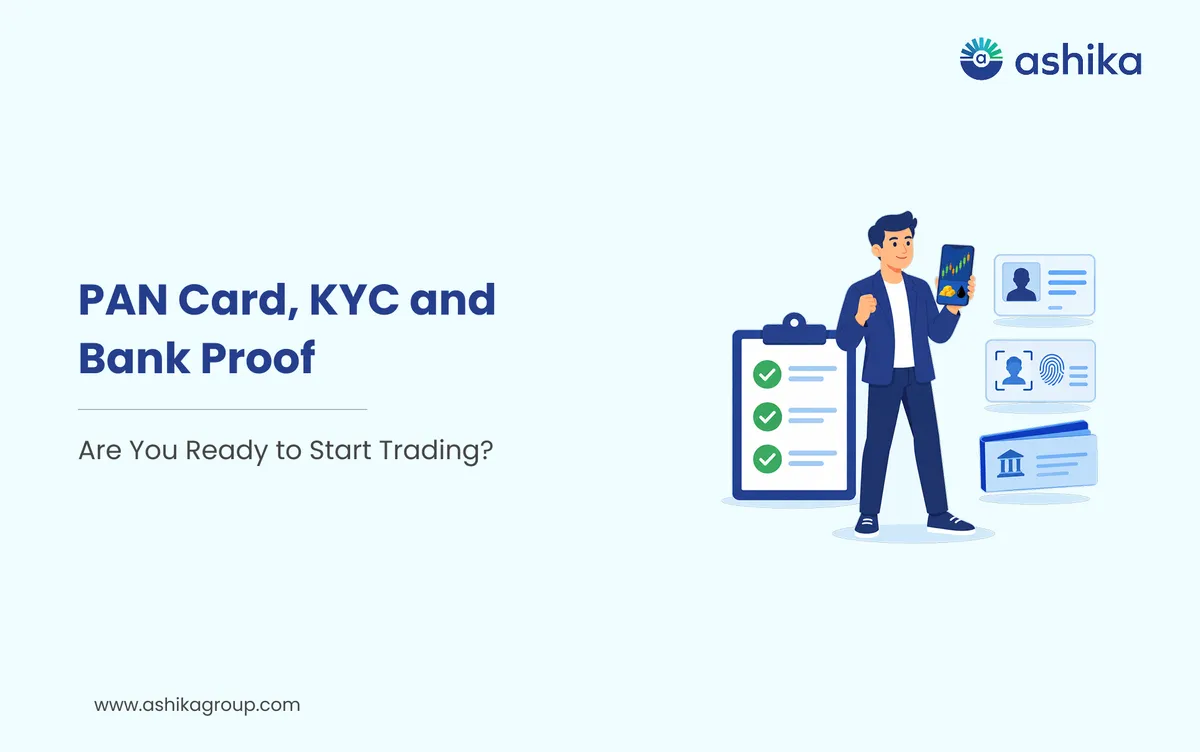
When registering with a stock broker or investment platform, you may be asked to provide:
- PAN details
- Proof of identity and address, as applicable
- Bank account details
- A registered mobile number and email address
- A photograph, signature or additional verification, where required
Lots of intermediaries offer online onboarding (including electronic KYC and Aadhaar based verification where allowed). The precise steps will vary according to the intermediary and the requirements in that case.
Always use the official website or app and check the details very carefully prior to submitting.
3. Know the Difference Between a Demat and Trading Account
If you're looking to invest in listed shares or ETFs then knowing about these two accounts is useful.
A Demat account holds your eligible securities in electronic form. A trading account allows you to place buy and sell orders via your broker.
They serve very different purposes, though brokers will often assist their customers in opening up both as part of the onboarding process.
Before you go any further, have a look at the account opening requirements, the brokerage charges, the relevant statutory charges and any annual maintenance fees. It's important to be aware of these as they will all have an impact on your investment experience.
4. Choose an Investment App for Beginners Carefully
An investment app can make it far easier to get access to financial products, to keep an eye on your portfolio and to keep up to date with market information. It's not however the ease of use of the interface that should be the determining factor in your decision.
When comparing platforms, consider:
- Regulatory status: Check the intermediary's registration and the services it is permitted to provide.
- Charges: Review brokerage charges, account maintenance fees and all other applicable charges.
- Available products: Check that the platform has the products you're familiar with and that you need.
- Research and learning tools: Look for clear explanations, market info and tools that will help you assess investments.
- Customer Support: Find out how you can raise queries and resolve any account related issues.
- Account security: Check your login protections, alerts and the process for reporting any suspicious activity.
An investment app is about giving you access to information and enabling you to carry out your transactions. It can't remove market risk or guarantee any returns.
5. Understand Your Options Before Investing
Beginners will come across a number of investment products, each with their own characteristics and levels of risk.
Stocks represent ownership in a company. The price of a stock can vary enormously and an investor can lose all of the money they have invested in a particular stock.
Mutual funds: Pool money from investors and invest according to a scheme’s objectives. The risks, costs and tax treatment depend on the type of fund and applicable rules.
ETFs: Trade on the stock exchange and generally track an index, an asset or a defined investment strategy. You'll generally need a Demat and trading account in order to buy exchange listed ETFs.
Fixed deposits: Interest is paid in accordance with the terms of the deposit. Before you invest you should look at the institution, the tenure, the conditions for early withdrawal and the relevant protections.
Don't pick an investment simply because it's popular or because it's just delivered a good return over the last few months. You need to think about your own objectives, your investment time frame, your ability to bear loss and your need for access to your funds.
6. Start with a Financial Plan, Not a Market Tip
Before you make your first investment you should look at your income, your regular outgoings, your existing commitments and your emergency savings. Money which is required for near term expenditure is probably not the sort of money that should be going into a market linked investment.
Next is to establish your objective. You may be investing for a particular long term goal, you may simply be building an investment habit or you may be looking to find out how various products work. Your time horizon and your level of comfort with risk will be key factors in your decision.
Don't go and borrow to invest just because an opportunity looks good. Be wary of any guaranteed return claims, unsolicited trading tips and the pressure to act right away.
If you're not sure where to start then look at diversified investment products and get advice from a properly registered and qualified professional.
7. Explore Tools That Support Your Learning
Some of the platforms will have market screeners, price alerts, research and product discovery tools etc. All of these can be of use in terms of helping you to organise the information and keep track of what's going on in the market. They should not in any way be regarded as a substitute for your own independent judgement.
For instance Ashika's Dhanush 2.0 platform gives access to a range of financial products and features (including an AI Screener and Price Alerts). The new platform is designed so that the user can go ahead and try out the various tools once they've had a chance to read up on what they are, what they can and cannot do and what the associated costs are.
Remember that research tools can assist you in your analysis of the information; they can't predict market moves with any degree of certainty.
Ready to open yours?
Free account opening · Paperless eKYC · Live in 10 minutes
Your First Investment Starts with Understanding
Getting your first PAN, doing your KYC and opening an investment account are all important admin steps. The real key step is to get to grips with how the various investments work before you actually commit any of your own money.
Take the time to compare platforms, understand the charges, define your own financial objectives and assess the risks involved. You don't necessarily need to have a mastery of every market concept before you get started but you do need to understand the product you're looking at and why it is appropriate for you.
Frequently Asked Questions
Can I start investing as soon as I receive my PAN card?
A PAN is an essential requirement for opening most securities market accounts, but it is not enough on its own. You must also complete the required KYC, link your bank account and open the relevant investment or Trading Account.
Do I need a Demat Account if I only want to invest in Mutual Funds?
Not necessarily. You can invest in Mutual Funds directly through an Asset Management Company (AMC) or an eligible investment platform without opening a Demat Account. A Demat Account is generally required to hold ETFs and exchange-traded shares electronically.
Can I use my parent's PAN to make my first investment?
No. Your investment account must be opened in your own name using your own PAN. If you are investing as a minor, the account must follow the applicable minor investment and guardian requirements.
Is there a minimum amount I need to invest when starting out?
There is no single minimum amount for all investments. It depends on the product and platform. Mutual Fund minimums vary by scheme, while the amount needed to buy an ETF or share depends on its market price and applicable charges.
What should I check before making my first investment through an investment app?
Check whether the platform is registered with the relevant regulator or associated with authorised intermediaries, understand the investment's risks and charges, and verify that your PAN, bank and KYC details are correct. Never invest solely on the basis of promised or assured returns.
Was this article helpful?
Thanks for your feedback!
 5 min read