When you start investing in ETFs you'll come across a few basic requirements, namely a PAN card, a Demat account and a trading account. These are the requirements that form part of the process that enables you to buy, sell and hold securities electronically in India.
But what does 'One PAN, One Demat' actually mean? Does it mean you can have only one Demat account? Can you invest in ETFs via multiple brokers? And how does your PAN link your investments across all your accounts?
Understanding the basics of this can go a long way towards helping you get through the process of investing via an ETF trading platform in India.
Table of Contents
- 1. What does one PAN mean in the securities market?
- 2. Can you have multiple Demat accounts with one PAN?
- 3. How is PAN used when investing in ETFs?
- 4. What is the difference between a PAN, a Trading account and a Demat account?
- 5. What documents are required to open an ETF investment account?
- 6. How does PAN help to track ETF investments?
- 7. Investing in ETFs Through an ETF Trading Platform India
- One PAN, Multiple Accounts, One Investor Identity
- Frequently Asked Questions
1. What does one PAN mean in the securities market?
A Permanent Account Number (PAN) is a unique identity number issued by the Income Tax Department. In the context of the Indian securities market, it is the key identifier for an investor.
When you open a trading or Demat account your PAN is collected and verified as part of the KYC process.
It helps the broker, the depository and all the other market intermediaries to identify the investor and to keep proper records of their dealings.
For instance if you invest in ETFs via one broker and then open up an account with a different broker you'll generally have both accounts linked to the same PAN.
This doesn't create two separate investing identities. Your PAN is the common identifier across all your securities market accounts.
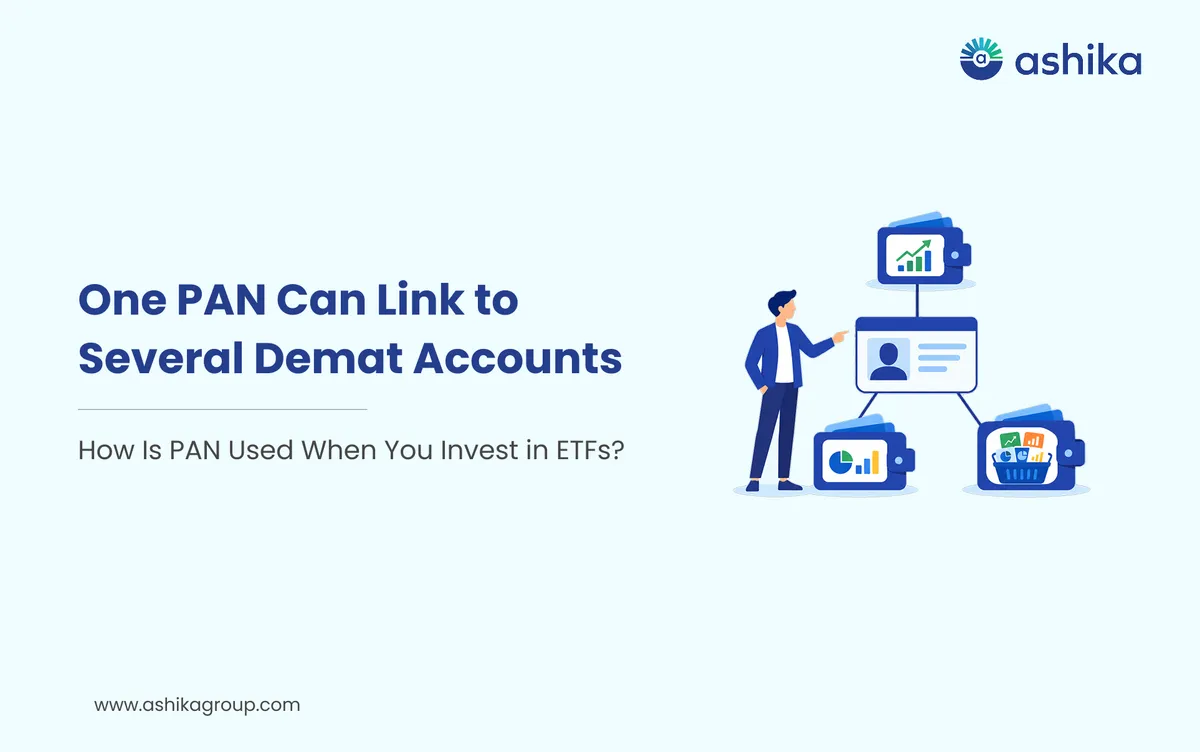
2. Can you have multiple Demat accounts with one PAN?
Yes, an individual can have multiple Demat accounts with the same PAN.
The 'One PAN, One Demat' statement should not be read as a rule that would restrict every investor to just one Demat account.
You can open accounts with various Depository Participants (DPs) (including different brokers) so long as you complete the requisite KYC and account opening documentation.
For example, an investor may have:
- One Demat account for long-term investments
- Another account for active trading
- An account with a different broker to access another platform
Each account has to be opened in the correct ownership pattern. You can't just swap an individual account for a joint account simply because they both have the same PAN.
Multiple accounts can provide flexibility but can also mean additional account maintenance charges, additional statements and additional record keeping.
3. How is PAN used when investing in ETFs?
An ETF is an investment fund which holds a portfolio of securities and trades on the exchange like an individual share.
When you buy ETF units via the exchange your trading account is used to place the order and the units are normally held electronically in your Demat account.
PAN is used to establish your identity at the time of account opening and is also used to track and verify the transactions in the securities market.
Suppose you buy units of a NIFTY 50 ETF via an ETF trading platform. Your broker will execute the order using your registered trading account and the units will be credited to your linked Demat account once settlement has occurred.
Your PAN is what enables us to identify you as the investor in those accounts.
4. What is the difference between a PAN, a Trading account and a Demat account?
These three serve different functions.
PAN: Identifies you as a participant in the securities market.
Trading account: Enables you to place buy and sell orders via a registered broker.
Demat account: Holds your eligible securities electronically.
To invest in ETFs that are traded on the exchange you'll need a trading account and a Demat account (along with the requisite KYC and bank account linking).
A Demat account in itself doesn't trade. Likewise a trading account isn't the electronic account in which your ETFs are held.
5. What documents are required to open an ETF investment account?
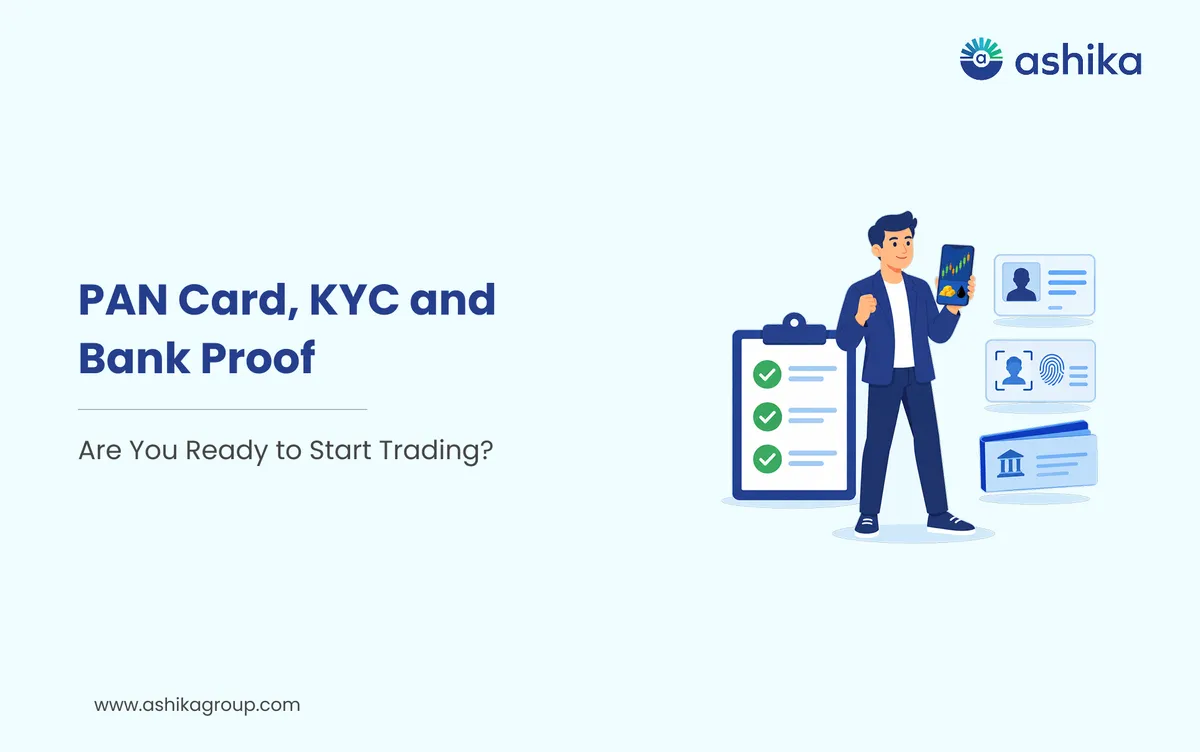
The documents and details generally required include:
- PAN card or accepted electronic PAN
- Aadhaar or other accepted identity and address proof
- Bank account details and verification documents
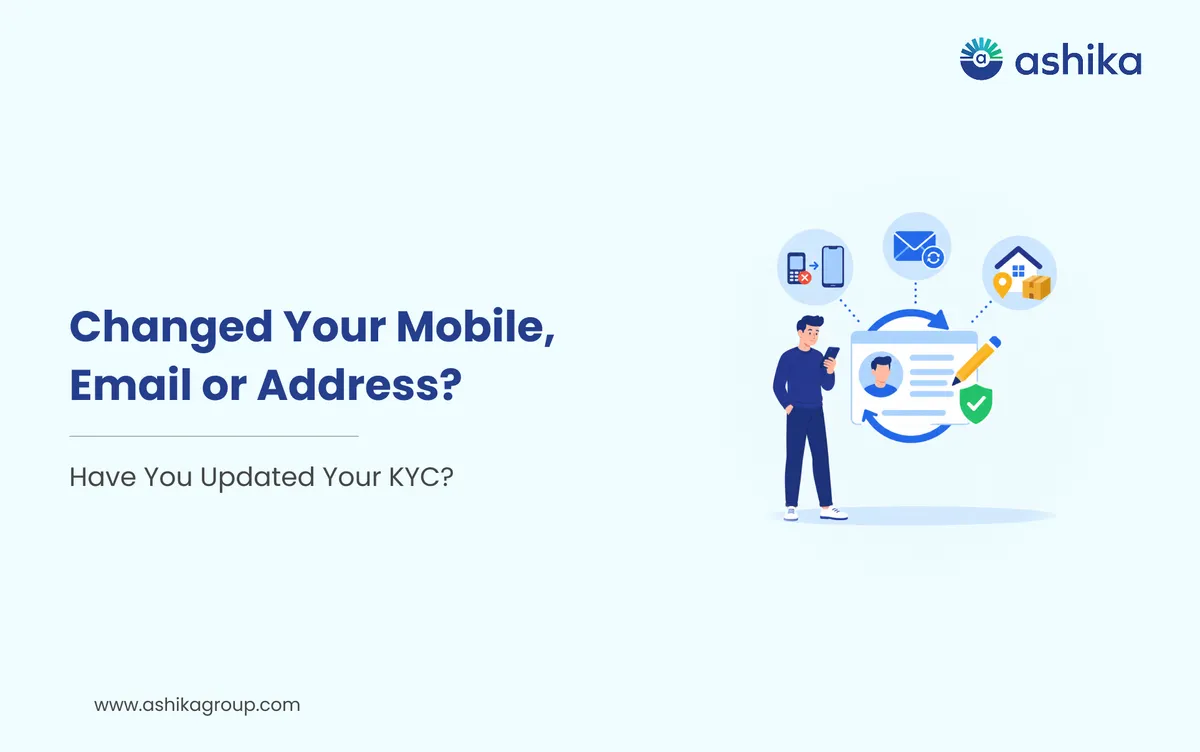
- Mobile number and email address
- Photograph and signature, where required
The broker may also ask for further information as part of its KYC and regulatory checks.
Your name (PAN) and all other details should be the same across all the documents you submit. If there's any change in the information, you need to go through the correct process to update it prior to opening or using the account.
6. How does PAN help to track ETF investments?
PAN provides a common identity reference for investments and transactions across eligible securities market accounts.
For investors who hold their ETFs via a number of Demat accounts this can help to provide a single consolidated view of their investment activity.
Depositories also provide Consolidated Account Statements (CAS) which can give you a consolidated view of your eligible securities and mutual fund investments based on your PAN and the applicable holding pattern.
However investors should still check the statements issued by their own brokers and DPs to confirm their holdings, transactions and account details.
7. Investing in ETFs Through an ETF Trading Platform India
An ETF trading platform in India enables investors to gain access to exchange listed ETF units via a trading account.
For instance Ashika Dhanush 2.0 brings the equity investment and market information together so that eligible users can go on to look at the various market segments that are available.
Before you invest in an ETF you should look at the index or underlying asset, the expense ratio, the liquidity, the tracking difference and the investment objective.
Remember that ETFs are market linked. Their prices will fluctuate and returns are not guaranteed.
Ready to open yours?
Free account opening · Paperless eKYC · Live in 10 minutes
One PAN, Multiple Accounts, One Investor Identity
PAN is an important identity link in India’s securities market, but it does not restrict an individual to one Demat account.
You can invest in ETFs through eligible accounts with different brokers, subject to KYC and account requirements. The key is to maintain accurate records, understand how your accounts work and monitor your investments regularly.
Before using an ETF trading platform in India, make sure you understand the account-opening process, associated charges and risks involved in investing.
Frequently Asked Questions
Can I open two Demat Accounts with the same PAN but different brokers?
Yes. An individual can hold multiple Demat Accounts with different brokers or Depository Participants, provided each account completes the required KYC and documentation.
If I buy the same ETF through two different brokers, will the units appear in one Demat Account?
Not necessarily. ETF units are credited to the Demat Account linked to the Trading Account used for each purchase. You may need to check both Demat Accounts to see your complete holdings.
Can I use one Trading Account with multiple Demat Accounts?
This depends on the broker's account-linking facilities and applicable requirements. Check with your broker whether multiple Demat Accounts can be linked to the same Trading Account.
How can I check all my ETF holdings across different Demat Accounts?
You can refer to your Consolidated Account Statement (CAS), which provides a consolidated view of eligible securities and Mutual Fund holdings linked to your PAN and applicable holding pattern.
If I have multiple Demat Accounts, do I have to complete KYC separately for each one?
You must complete the account-opening and verification requirements for each account. Existing KYC details may be available for reuse or verification, but the broker or DP may request additional documents or information
Was this article helpful?
Thanks for your feedback!
 6 min read