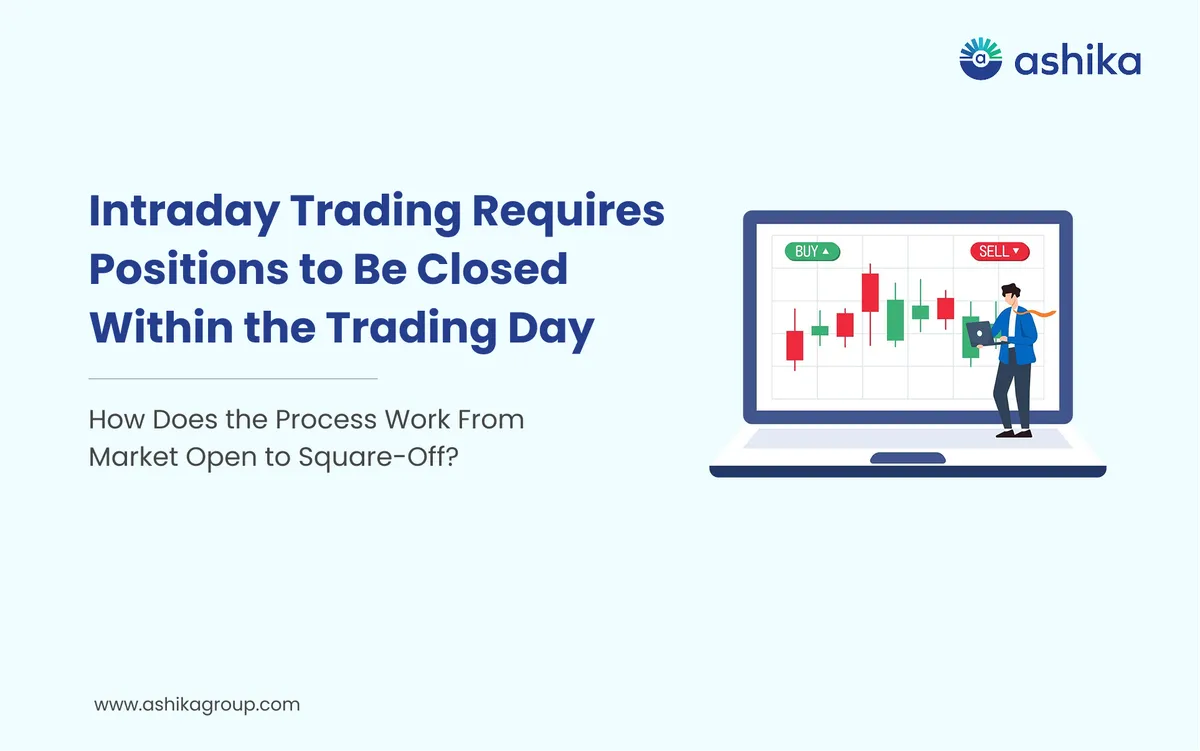
The Indian stock market starts regular trading at 9:15 AM, and the prices begin to move as orders are matched, new information reaches the investors and the various market participants respond to the changing situation. An intraday trader will probably spend the following hours keeping a close eye on a small number of stocks, placing orders and deciding on when to get out. Each of these decisions is important since the position is meant to be closed before the end of the trading day.
The fundamental concept of intraday trading is that a trader purchases and sells a share during the same trading session, or sells it first and then buys it back later, according to his position and the rules applicable to the product. Unlike delivery investing, the objective is not to keep the shares for days or months, the emphasis being on the price changes that take place over a single day.
There's actually more involved in intraday trading than simply identifying a stock that is moving rapidly.
Table of Contents
Before the Opening Bell, There Is Homework
A typical trading day usually starts before the markets open. During this time, traders can look at global market indicators, company announcements, economic news and the closing prices from the previous day. They might also put together a watchlist of stocks which have displayed unusual volume or are nearing significant price levels.
This method helps to reduce the number of possible options; if you look at dozens of stocks without a plan it will be more difficult to remain calm when the prices start to change.
On weekday trading days, excluding exchange holidays, India's normal equity market session usually takes place from 9:15 AM to 3:30 PM, and there is also a pre-open session which occurs before the regular trading session starts. The opening price may be affected by the orders submitted during the pre-open session as well as by news and the general atmosphere of the market.
A trader who is well prepared will generally have several considerations in mind, such as which stock to keep an eye on, the price at which the trade might become interesting, how much money to risk and what circumstances would make the original idea invalid. Such decisions should be made before emotions come into play.
What Actually Happens When an Order Is Placed?
Let us imagine that a trader is looking at a stock which is priced at about ₹450. When the price starts to go up, the trader thinks that it could rise further during the session. Having taken into account the possible loss and their trading plan, they choose to buy 100 shares.
The order is then sent to the market via the trading platform and the broker, and what occurs afterwards varies according to the type of order and the availability of buyers and sellers.
A market order is intended to be carried out at the best available prices, but the actual execution price might still be different from the price displayed on the screen. This situation can occur when prices change rapidly or when there is low liquidity. In contrast, a limit order sets out the highest price a buyer is willing to pay or the lowest price a seller will accept. While it provides price control, execution is not assured.
When the order has been carried out, the trader will have an open position. The price of the share may go up, go down or stay almost the same. So long as the position is not closed, the profit or loss may still keep on changing.
By using trading apps, investors can see prices, charts, orders, and positions all in one place. For example, platforms like Ashika's Dhanush 2.0 offer digital access to market information and trading tools. Yet the fact that more information is displayed on the screen does not mean that the trade will be a good one.
A Green Number Does Not Tell the Whole Story
Picture the price of the stock increasing from ₹450 to ₹455; on 100 shares this amounts to a difference of ₹5 per share and therefore a gross profit of ₹500 before any charges are deducted.
The calculation is simple, but the decision as to what should be done next is not.
The price of the stock might keep going up, might turn around suddenly or it might stay the same. A trader has the option of leaving the position at the predetermined target, of closing it when the stop-loss is activated, or of reevaluating the trade as new information becomes available. However, none of these actions ensures that the result will be a profit.
A stop-loss is designed to reduce possible losses by causing a sale when the price has reached a certain level. In markets that are rapidly moving, the price at which the order is actually executed may differ from the trigger price. It must be understood that a stop-loss is a risk-management device and not a guarantee that losses will remain within a specific amount.
The same warning holds true in the case of technical indicators, charts and market news. Although they can assist traders in evaluating the situation, no individual signal is capable of predicting every move in prices. A stock which has already risen sharply might keep on going up—or it may turn around suddenly.
The Cost of Closing a Trade
Let us assume that the trader sells the 100 shares at ₹455 having bought them at ₹450; the ₹500 difference then is the gross trading profit.
The balance remaining after the transaction has been completed could be less. The fees that apply will depend on the type of trade and may consist of brokerage, Securities Transaction Tax (STT), exchange transaction charges, GST and other statutory charges.
It is important to take these costs into account, especially in the case of a trader who carries out a large number of transactions or is dealing with small price differences. A trade which seems profitable before the deduction of expenses might in fact yield a considerably lower net profit after the charges have been applied, and a trade that is initially a loss can also end up being more expensive when multiple transactions contribute to the total cost.
That is why it is useful to study the broker's pricing structure and to check the relevant charges before engaging in trading; the profit and loss should be evaluated after taking into account the costs, not merely on the basis of the entry and exit prices.
Why Square-Off Is an Important Part of the Day
Just because a trader has stopped looking at the screen does not mean that intraday trading has come to an end; the open position has to be closed in accordance with the product's rules and the broker's procedures.
To 'square off' means to carry out the opposing transaction in order to close out a position that one already holds. A trader who has bought shares would usually sell them in order to get out of the position. In the case of someone who has opened a permitted intraday short position, they would normally buy back the shares to close it.
Traders ought to look at their broker's square-off cut-off time rather than delaying until the last minutes of the session; if a position is still open after the allowed time has passed, the broker could close it automatically and relevant charges might result. The specific details and timing however, may differ.
The exit is included in the original trading plan and is not something to consider at the last minute as an administrative matter.
Ready to open yours?
Free account opening · Paperless eKYC · Live in 10 minutes
What Beginners Should Understand First
At first sight, intraday trading seems simple when you are given an entry price, an exit price and the difference between them. In reality, however, decisions have to be made as the prices are changing and the results remain uncertain.
People should first study how order types function, understand transaction costs and practice calculating possible losses before carrying out actual trades. They should avoid using money that has been borrowed or risking the funds which are needed for their daily expenses. It is also a good idea to keep a trading journal in which they record the reasons for each trade, how it was managed and what could be improved.
Most important of all, intraday trading does not guarantee a daily income and it is possible to suffer losses even if the trader has prepared carefully.
The market begins at a specific time, but it doesn't adhere to a predictable pattern. Traders gain a better understanding of what occurs during the session if they know how an order is placed, how a position's value changes and how it has to be squared off. The decision as to whether or not to place a trade is a separate one—and is often the more important one.
Frequently Asked Questions
What is Intraday trading?
Intraday trading involves buying and selling shares within the same trading session. The objective is to benefit from price movements during the day rather than holding shares for days or months.
What are the regular trading hours for the Indian stock market?
The regular equity market session in India generally runs from 9:15 AM to 3:30 PM on trading days, excluding exchange holidays. A pre-open session takes place before regular trading begins.
What does square-off mean in Intraday trading?
Square-off means closing an existing position by carrying out the opposite transaction. For example, a trader who buys shares must sell them to close the position, while a permitted intraday short position is closed by buying back the shares.
Does a stop-loss guarantee that losses will remain limited?
No. A stop-loss is intended to help manage potential losses by triggering an order at a specified price level. In a rapidly moving market, the actual execution price may differ from the trigger price.
What costs are involved in Intraday trading?
Intraday trading may involve brokerage, Securities Transaction Tax (STT), exchange transaction charges, GST and other applicable statutory charges. These costs can reduce the net profit or increase the overall loss from a trade.
Was this article helpful?
Thanks for your feedback!
 6 min read