A figure that ought to make any new trader think twice is the finding from SEBI's own profitability analysis for fiscal year 2025–26, which was released in August 2026, showing that 87.7% of individual equity-derivatives traders suffered a loss during the period in question. It's not just a small number or the case of a risky minority—nearly nine out of ten traders lost money. This one statistic should be the foundation of any sensible understanding of F&O trading in India—not with the intention of completely scaring you away, but rather to establish realistic expectations before you commit real money.
Table of Contents
What F&O Actually Means
F&O is an abbreviation for Futures and Options — it refers to two kinds of derivative contracts the value of which is derived from an underlying asset, this being usually an index such as the Nifty 50 or the Bank Nifty, or a single stock. Different from the situation where you pay the full price and thus take ownership of the shares, with F&O you can take a leveraged position by using margin, this usually amounting to just a fraction of the actual value of the contract. It is this leverage that makes F&O so attractive and at the same time what makes it so dangerous.
Futures: A Firm Commitment
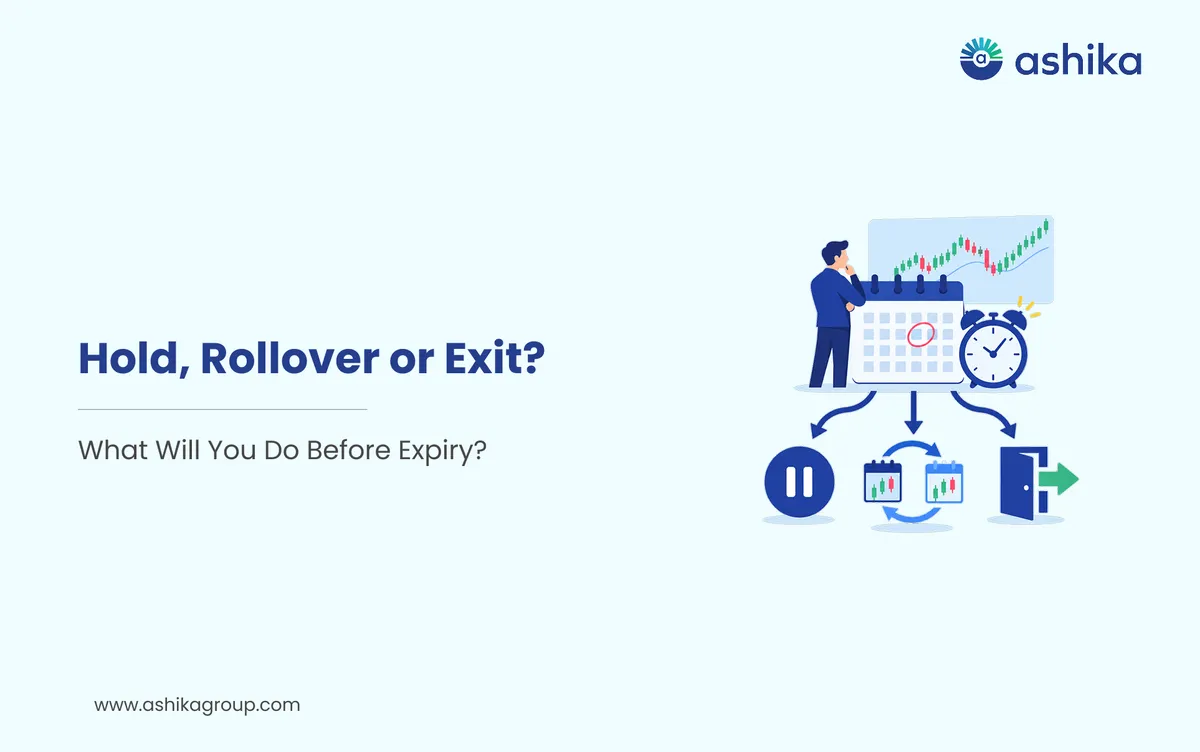
With a futures contract both parties are required to carry out the transaction at a predetermined price on a specific date—there is no room for flexibility and no possibility of walking away. Should you purchase a Nifty futures contract with the expectation that the index will rise but it ends up falling, you will have to take the loss, with no exceptions. Unlike the case with options, there is no limit on your potential losses. The margin requirements reflect this level of seriousness: the amount required for a single Nifty lot, consisting of SPAN plus an exposure margin, is currently somewhere between ₹65,000 and ₹85,000, depending on the level of market volatility at the time. This represents a significant amount of capital that is committed to a single position, which is the reason why futures are generally suitable for traders who have more capital and a well-defined risk strategy than a typical beginner possesses.
Options: Right Without Obligation
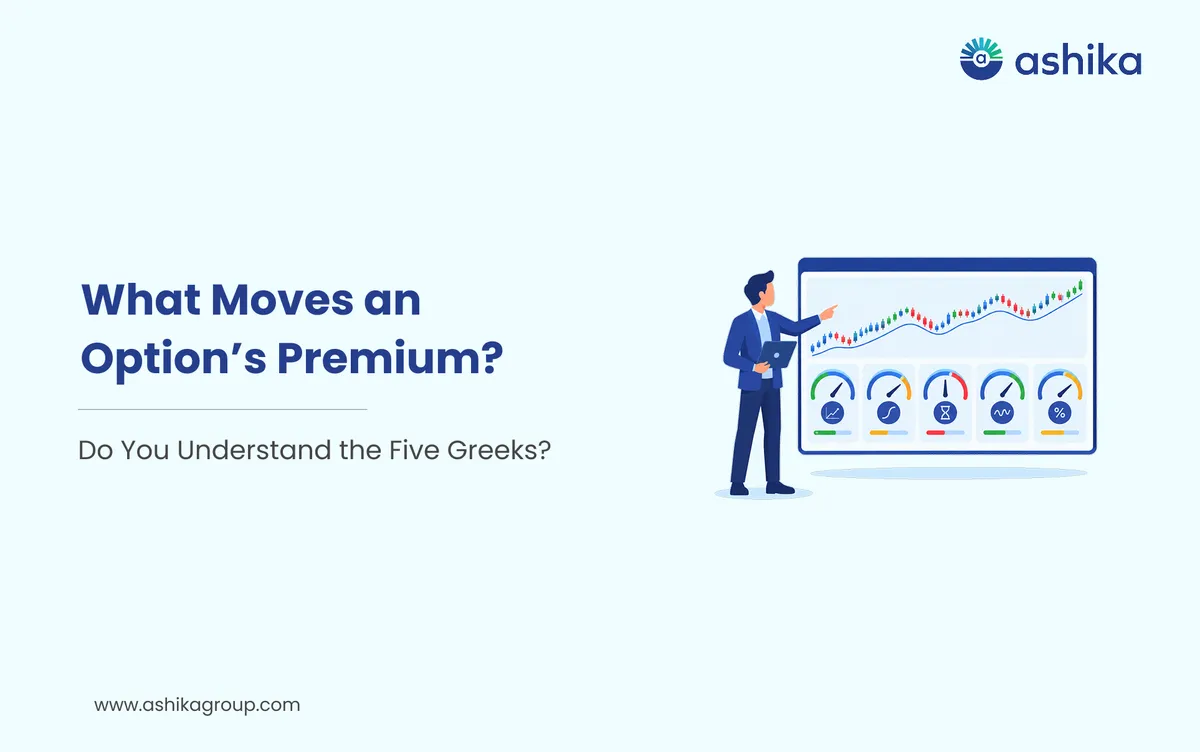
The way options function is different, and this point is of great importance for those who are just getting started. When you buy an option, you acquire the right but not the obligation to buy or sell at a predetermined price before the option expires. In the event that the trade doesn't work out, your loss will be no more than the premium that you paid. Currently, a single at-the-money Nifty option carries a premium that ranges from ₹5,000 to ₹20,000, which is the reason why most strategies aimed at beginners involve buying options rather than futures—the maximum possible loss is known in advance, before the trade is placed.
Selling (or writing) an option is quite a different proposition since one's potential losses in such a case can exceed the premium received, in some instances with no real upper limit. Almost all serious books on this topic state exactly the same thing: do not sell options until you have a full understanding of margin mechanics and assignment risk; you should begin by studying the side of buying, since there the risks are clearly defined.
Why the Rules Changed So Much Recently
The F&O market in India has evolved from one that was mainly controlled by institutions to one which now has millions of retail traders involved – and because SEBI's data showed that the majority of these retail participants were suffering substantial losses, this prompted actual regulatory action. Since 2024 there have been major changes: the minimum contract sizes for index derivatives have been increased to around ₹15 lakh in notional value, as compared to the previous range of ₹5 to ₹7 lakh. As a result, lot sizes have been altered more than once – the lot size for the Nifty 50 was first raised to 75 units following the 2024-25 changes and was then changed again to 65 units effective from January 2026 to take account of index growth. The implication for a new trader is that you should not depend on the lot sizes or margin figures that you recalled from a year or two ago. These figures are subject to change, and trading on outdated assumptions is one of the simplest ways of being caught unawares regarding capital requirements.
Buyers of options also have to pay the full amount of the premium all at once—this change in the rules was designed to close the gap in which some brokers had previously allowed intraday deferrals of the premium, enabling traders to hold positions larger than the amount they had actually funded.
What This Means If You're Starting With ₹1-3 Lakh
For an individual who is actually beginning with a small amount of capital, the practical advice is pretty much the same in all reliable sources on this subject: limit yourself to risking only 1–2% of your capital on each trade, prefer liquid index options to illiquid stock contracts, pay the full premium upfront since that is now the requirement, and never trade with money which you genuinely can't afford to lose. It seems almost too simple to have to repeat it, but the SEBI data shows that the majority of traders who suffered losses were not even observing these fundamental rules—they were sizing their positions emotionally, chasing their losses, or trading on the basis of a tip they had received from a WhatsApp group rather than having an actual plan.
The Part Nobody Wants to Hear
A story that appears in almost all of the more recent books and guides about this subject is worth going over again since it is in fact quite typical: a young professional puts aside a small sum of money, is attracted by the social media posts claiming quick profit opportunities, enters the market without having any real strategy, and ends up losing most of it in one sudden move in the market. This is not an uncommon warning story—it's actually near the average result, since almost nine out of ten traders suffer losses in this area. F&O isn't inherently risky. Global institutions use these same tools every day to hedge risk and manage their exposure. Yet seeing it as a fast and easy method of growing a small amount of money is exactly the kind of mindset that the data shows fails most frequently.
Building the Right Habits From Day One
If you really want to learn this properly, you should first try paper trading before risking any actual money, get used to reading an option chain before you place a live order, and make sure that you know your maximum possible loss on each and every trade before you enter it — not afterwards. The option chain view and GTT order facilities in Dhanush 2.0 are designed with this kind of discipline in mind, enabling you to set a predetermined exit point in advance rather than making a decision emotionally during the course of a rapidly moving session.
Ready to open yours?
Free account opening · Paperless eKYC · Live in 10 minutes
What You Should Do Next
- Wait until you have a full understanding of margin and assignment risk before you decide to sell rather than buy.
- Do not risk more than 1-2% of the capital employed in trading on any one position, and never use money that has been borrowed or that is reserved for emergencies.
- It is necessary to check the current lot sizes and margin requirements before carrying out each trade since these have changed more than once in the past two years.
- First try out paper trading or take small positions, and make sure to study the option chain thoroughly before making a live trade.
F&O trading needn't be something to worry about, but it's also not something you should get involved in casually. You should understand how it works, respect the risks involved, and use the data—not the hype on social media—to determine the size of your first few trades.
Frequently Asked Questions
What does F&O trading mean?
F&O stands for Futures and Options. These are derivative contracts whose value depends on an underlying asset, such as a stock or market index.
What is the difference between futures and options?
A futures contract creates an obligation to buy or sell the underlying asset under the agreed terms. An options contract gives the buyer the right, but not the obligation, to buy or sell it.
What is margin in F&O trading?
Margin is the amount of money a trader must maintain to open or hold certain derivative positions. The required margin varies by contract, market conditions and applicable exchange rules.
How much can a beginner lose in F&O trading?
An options buyer can lose the entire premium paid, while futures traders and option sellers may face losses beyond their initial margin. The potential loss depends on the position and market movement.
What should beginners do before starting F&O trading?
Beginners should understand contract specifications, lot sizes, premiums and margin requirements before placing trades. Practising with paper trading and setting clear risk limits can help build familiarity without immediately risking capital.
Was this article helpful?
Thanks for your feedback!
 5 min read