Options trading allows investors and traders to take a position on the direction of a stock or market index without having to actually buy or sell the underlying. On an online trading platform in India you can generally go in and buy or sell Calls and Puts (depending on your account and the contracts that are available to you).
However buying and selling options are very different indeed. They involve different initial outlays, different margin requirements, different potential for profit and different risks. It's essential that the novice understands these differences before they even consider trading options.
Table of Contents
1. What is Option Buying?
Option buying is when you buy a Call or a Put option by paying a premium.
A call option gives the holder the right to buy the underlying at the strike price. A put option gives the holder the right to sell the underlying at the strike price.
A trader might buy a Call if they're expecting the underlying to go up or buy a Put if they're expecting it to go down.
The premium is what you pay to buy the option. So if the option has a premium of Rs.100 and the lot size is 50, the total premium paid is Rs.5,000 (excluding any applicable charges).
The buyer's maximum loss is generally limited to the premium paid and the potential profit will vary depending on the type of option and the movement of the underlying.
The option's value can still go down even if the market moves in the direction you'd have anticipated. Volatility and the length of time to expiry will also have an impact on the premium.
2. What is Option Selling?
Option selling (also known as option writing) is the act of selling a Call or a Put and taking the premium from the buyer.
The seller has an obligation under the contract. A Call seller is in a position to lose if the underlying price moves sharply upwards, a Put seller is in a position to lose if the underlying price moves sharply downwards.
For instance, suppose a trader sells an option for a premium of Rs.100 with a lot size of 50. The premium received would be Rs.5,000 (excluding charges).
If the option expires worthless the seller may keep the premium (subject to applicable settlement rules). If however the market moves against the position the seller's loss can be greater than the premium received.
For an uncovered call the potential loss is in theory unlimited. Put selling can also lead to significant losses if the underlying price drops sharply.
3. Risk and Reward: How do they differ?
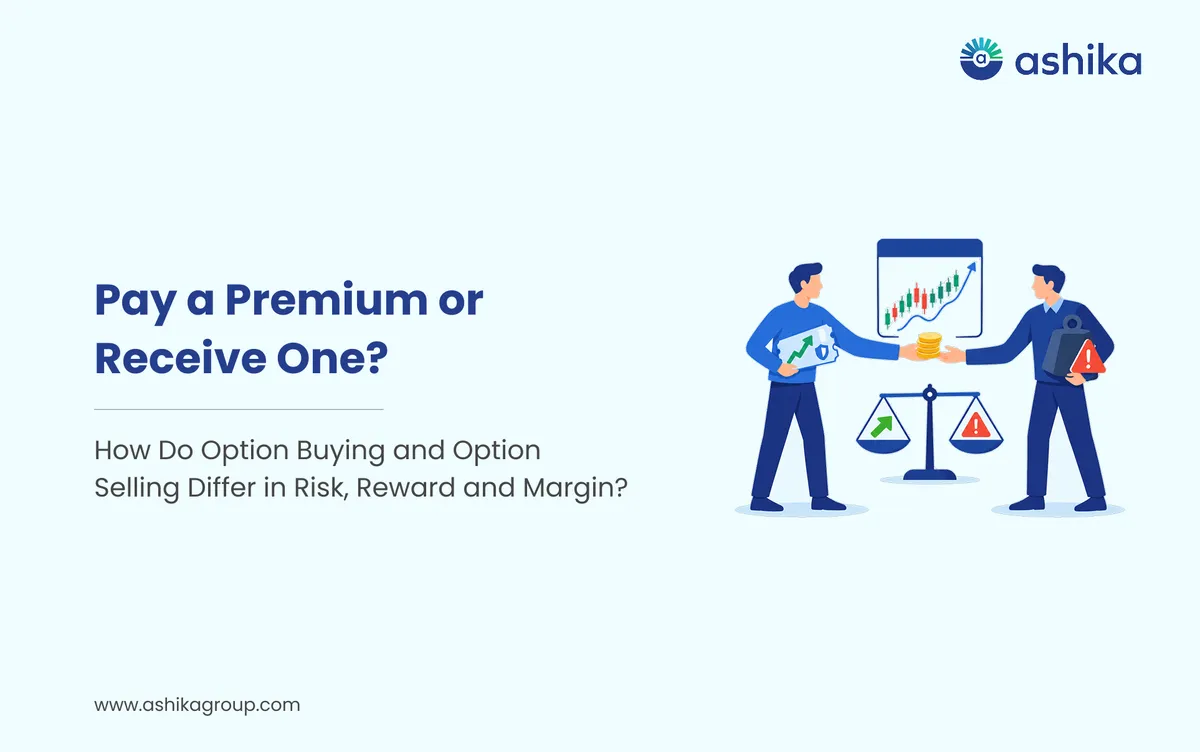
Option buying generally involves paying a premium. The buyer can potentially benefit from a favourable move in the market, though the option may of course expire worthless if the move is not sufficient.
Option selling is about receiving the premium. The maximum profit of the seller on an uncovered short option is typically just the premium received (although in some cases it may be slightly more), while the potential losses can be considerably greater.
This creates a difference in risk and reward:
- Option buyers are at risk of losing the premium they've paid.
- Option sellers may take the premium, but can be left with substantial losses.
- Both buyers and sellers can end up with a loss even if they have a market view, if the price movement, the timing or the volatility doesn't work in their favour.
SEBI and NSE investor education materials caution that options trading carries significant risk and may not be suitable for every investor.
4. Understanding Margin in Option Trading
Margin is the key difference between buying and selling options.
Option buyers pay the full premium up front. They don't generally need to put down the same risk margin as would be required in an uncovered option selling position.
Option sellers on the other hand are generally required to maintain exchange prescribed margins (these may be SPAN or other risk based margins, exposure margin and other requirements where applicable).
The amount will depend on the contract, the level of market volatility, the movement in the underlying and whether or not the position is hedged.
For instance a trader writing an uncovered option may require vastly more capital than someone who is simply buying an option with the same strike and expiry. The margin requirements can also change as the position is open.
5. How an Online Trading Platform Helps
An online trading platform in India enables eligible users to trade options (i.e. access the contracts), view the premiums, select the strike price and the expiry date and place the order.
Depending on the platform, features may include:
- Option chain showing call and put prices.
- Charts to look at price movement.
- Margin calculators to work out how much you'll need.
- Order book and position data.
- Profit and loss information.
These tools can assist the user in understanding the contract prior to the order being placed. A margin calculator or a payoff chart will not however guarantee the outcome of the trade.
6. What should beginners consider?
Before trading options, understand the contract’s strike price, premium, expiry date, lot size and margin requirements.
Also consider the potential loss, not just the expected profit. Options can lose value rapidly as expiry approaches, and selling uncovered options can involve substaAn online trading platform like Ashika Dhanush may provide access to options trading and the relevant market data, subject to account eligibility and the features available on the platform. The platform itself does not eliminate the risks of trading in derivatives. derivatives.
Ready to open yours?
Free account opening · Paperless eKYC · Live in 10 minutes
Understand the Risks Before Trading
Option buying and option selling are two different ways of getting into the derivatives market and neither of them in any way guarantees a profit. Option buying will generally have a loss which is limited to the premium paid whereas option selling can involve a very large margin requirement and can potentially lead to much larger losses.
Before you place a trade you need to understand the contract, check the margin required and consider whether you can afford the potential loss.
Frequently Asked Questions
If I buy an option and the market moves in my expected direction, can I still lose money?
Yes. The option premium is affected by more than the underlying price. Time to expiry and volatility also influence its value, so the premium can fall even when the market moves in your expected direction.
Why does option selling require more margin than option buying?
An option buyer pays the premium upfront, and the maximum loss is generally limited to that amount. An option seller takes on a contractual obligation and potentially much larger losses, so exchange-prescribed margins are required.
What is the maximum amount I can lose when buying an option?
For a standard option purchase, the maximum loss is generally the premium paid, along with applicable charges. If the option expires worthless, the buyer can lose the entire premium.
If I sell an option and collect the premium, can I keep the entire amount as profit?
Only if the position's final outcome allows it. If the market moves against the seller, losses can exceed the premium received. The premium collected is not guaranteed profit.
Can the margin required for an open option-selling position increase after I have placed the trade?
Yes. Margin requirements can change with market volatility, movements in the underlying, contract conditions and applicable exchange rules. You may need to maintain additional funds while the position remains open.
Was this article helpful?
Thanks for your feedback!
 6 min read